
Newsletter Subscribe
Enter your email address below and subscribe to our newsletter

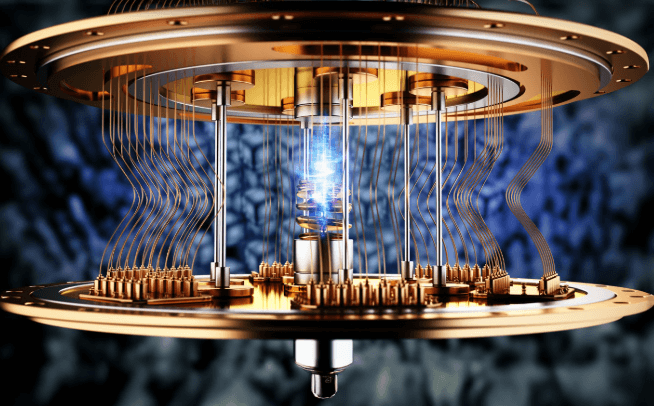
Quantum computing is an emerging field of computing that uses the principles of quantum mechanics to process information in fundamentally different ways from traditional computers. While classical computers use bits that represent either 0 or 1, quantum computers use quantum bits, or qubits, which can exist in multiple states simultaneously. This unique capability allows quantum computers to solve certain complex problems much more efficiently than conventional computers.
Although quantum computing is still developing, it has the potential to transform industries such as healthcare, finance, cybersecurity, logistics, materials science, and artificial intelligence. This guide explains what quantum computing is, how it works, its core principles, benefits, applications, challenges, and future opportunities.
Quantum computing is a type of computing that uses the principles of quantum mechanics to perform calculations. Instead of relying only on binary bits, quantum computers process information using qubits, enabling them to handle certain types of calculations in ways that differ significantly from classical computers.
Quantum computers are designed to complement traditional computers by addressing specialized computational problems rather than replacing them.
Qubits are the basic units of information in quantum computers. Unlike classical bits, qubits can represent multiple states under quantum mechanical principles.
Superposition allows qubits to exist in more than one possible state until they are measured, enabling quantum systems to explore many possibilities during computation.
Entanglement creates strong correlations between qubits, allowing operations on one qubit to be related to another in ways that support certain quantum algorithms.
Quantum gates manipulate qubits to perform calculations, similar to how logic gates operate in classical computing.
When a quantum computation is complete, qubits are measured to obtain a classical result.
Uses quantum mechanical properties to perform specialized computations.
Quantum algorithms can evaluate multiple computational possibilities in unique ways.
Designed to tackle complex optimization, simulation, and mathematical problems.
Supports research in chemistry, physics, and materials science.
Quantum computing continues to advance through ongoing research and development.
Quantum computers often work alongside classical computers for practical workflows.
Quantum computers may solve certain computational problems more efficiently than classical systems.
Researchers can model complex molecules and materials more accurately.
Quantum algorithms may improve optimization tasks in logistics, manufacturing, and finance.
Quantum computing is being explored for potential applications in machine learning and data analysis.
Complex scientific simulations may become more efficient using quantum techniques.
Researchers use quantum computing to explore molecular interactions and accelerate pharmaceutical research.
Quantum simulations help scientists study advanced materials with unique properties.
Financial institutions investigate quantum methods for risk analysis and portfolio optimization.
Quantum computing contributes to research on future encryption methods and secure communication.
Organizations study quantum algorithms for improving transportation and logistics planning.
Scientists explore quantum computing for complex environmental modeling and forecasting.
Researchers investigate how quantum computing may enhance selected AI and machine learning tasks.
Qubits are described by quantum states that determine how they behave during computation.
Specialized algorithms are designed to take advantage of quantum mechanical properties for specific computational tasks.
Quantum circuits organize sequences of quantum operations to perform calculations.
Quantum systems require advanced techniques to reduce the effects of noise and maintain reliable computations.
Different hardware approaches are being developed to build stable and scalable quantum computers.
Building stable quantum computers remains a significant engineering challenge.
Qubits are sensitive to environmental interference, which can introduce computational errors.
Research and development require advanced facilities and specialized expertise.
Many quantum applications are still in the research and experimental stages.
Understanding programming provides a strong foundation for studying quantum computing.
Linear algebra, probability, and basic calculus are helpful for understanding quantum concepts.
Learning the basic principles of quantum mechanics makes advanced topics easier to understand.
Study well-known algorithms to understand how quantum computers solve specialized problems.
Quantum simulators allow learners to experiment with quantum programming concepts using classical computers.
Follow developments in quantum research, hardware, and software as the field evolves.
Quantum computing enables researchers to investigate problems that are difficult for classical systems.
Specialized algorithms offer new approaches to solving complex mathematical challenges.
Healthcare, finance, manufacturing, and scientific research continue exploring practical quantum applications.
Quantum computing works alongside classical computing rather than replacing it, allowing each to address different types of problems.
Quantum computing is a computing approach that uses quantum mechanics and qubits to solve certain complex computational problems differently from traditional computers.
A qubit is the basic unit of information in a quantum computer. Unlike a classical bit, a qubit can represent multiple possible states according to quantum mechanical principles.
No. Quantum computers are expected to complement classical computers by solving specialized problems, while traditional computers remain suitable for most everyday computing tasks.
Potential applications include healthcare, finance, logistics, materials science, cybersecurity research, artificial intelligence, and scientific simulation.
Yes. Quantum computing systems exist for research, education, and experimental applications, although they are still developing and are not yet widely used for general-purpose computing.
Quantum computing represents one of the most exciting developments in modern technology. By using the principles of quantum mechanics, quantum computers offer new ways to solve specialized computational problems that are difficult for traditional computers. Although the technology is still evolving, its potential applications in healthcare, finance, scientific research, artificial intelligence, logistics, and cybersecurity make it an important field to watch. As research continues and quantum hardware improves, quantum computing is expected to play an increasingly significant role in advancing science, technology, and innovation.

